Greenport, Long Island · New York
A little cove on a great harbor — where, for more than a century, the people of Greenport have kept their boats, taught their children to row, and found shelter when the weather turned.
A place people have always enjoyed by boat
On the west shore of Greenport Harbor, below Fourth Street and the feet of Brown and Clark Streets, the land makes a small hook around a pocket of quiet water. Sailors call such a spot a hole — a sheltered hollow in the shoreline where a boat can lie safe. This one carries a widow’s name, and it has carried the village’s small boats for as long as anyone can document.
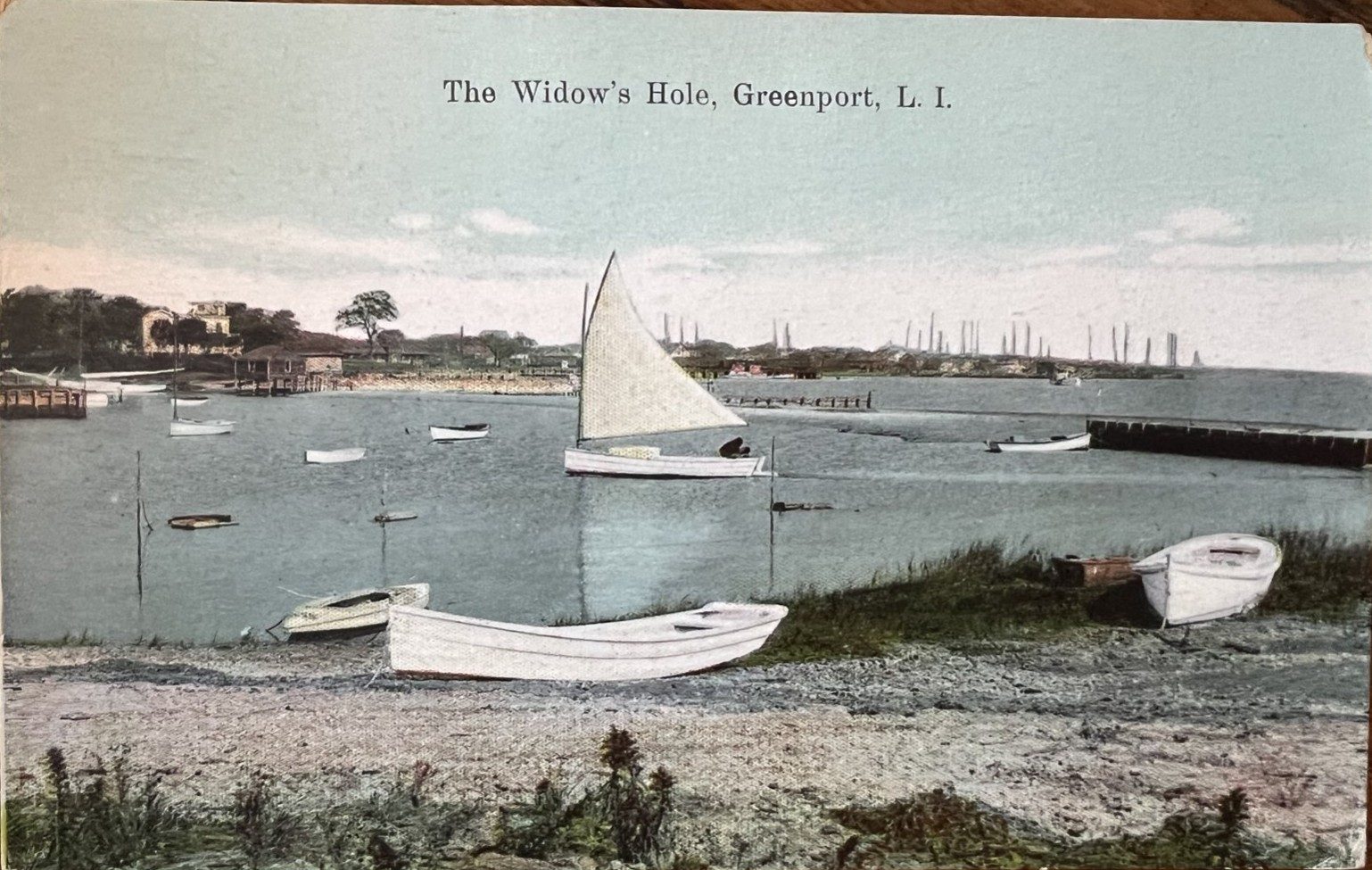
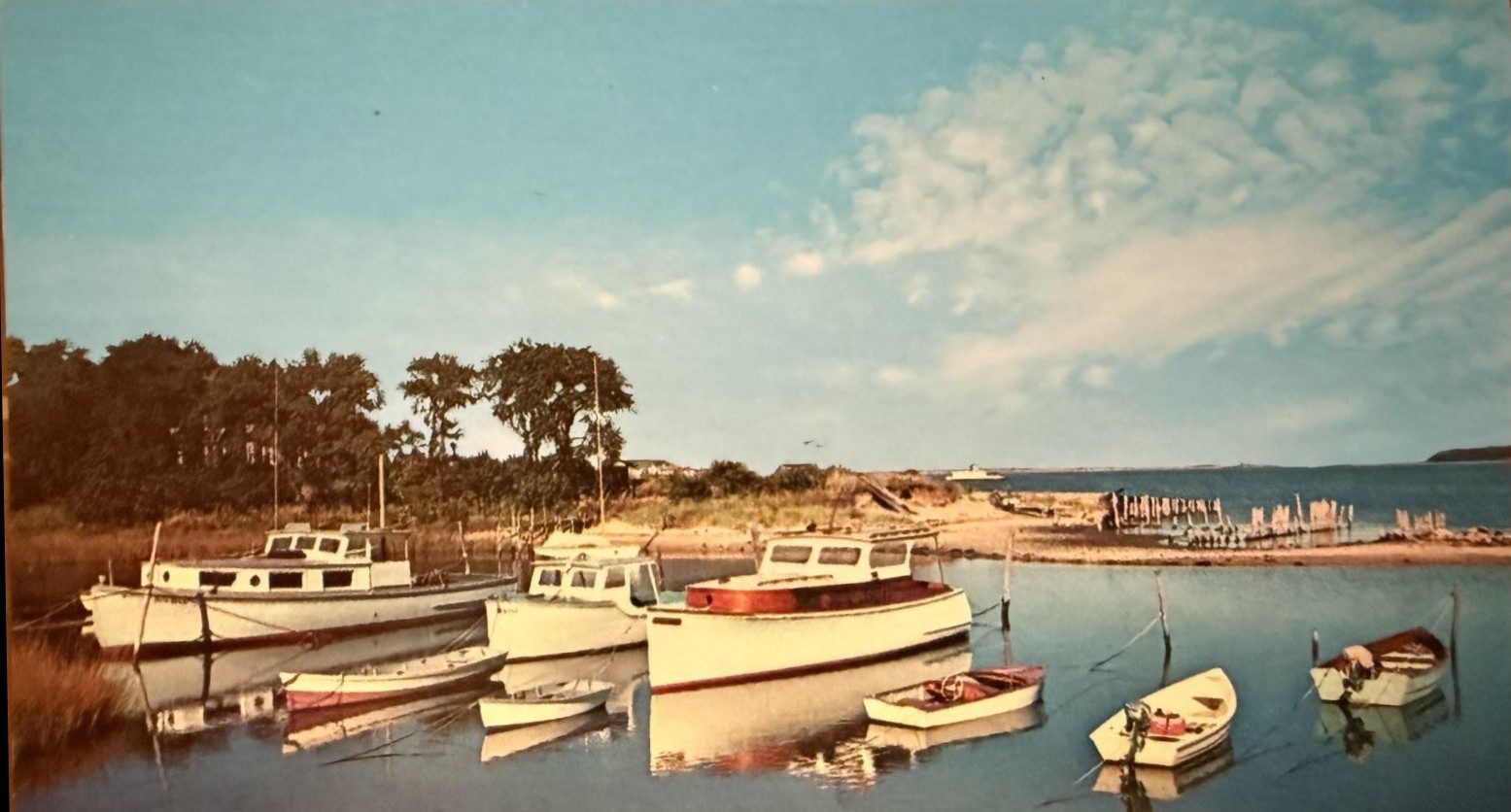
The postcards mailed from Greenport in the first years of the twentieth century already show the scene that defines this place: catboats and skiffs on their stakes, a bulkheaded shore, children’s rowboats hauled up on the beach. A mid-century card printed on its back what locals already knew — that Widow’s Hole was a “boating paradise” where “seagoing craft of all types” found a favorite anchorage. The Village of Greenport still maintains public stake moorings in the basin today, a practice generations old. The boats have changed — sail to naphtha to gasoline to outboard — but the picture has not.
“This sheltered deepwater anchorage is a favorite mooring spot for local mariners, who find the waters around Greenport ideal for boating and fishing.” — printed on the back of a Widow’s Hole postcard, Tomlin Art Co., mid-1950s
Explore
From the widow Leverich and the whaling fleet to the oil terminal, the gift, and the restoration — six chapters, two centuries.
IIA collection of vintage postcards of Widow’s Hole, 1900s–1960s — plus the messages people mailed home from Greenport.
IIIThe rock barrier at the mouth of the cove, in old photographs and new — including the 2026 stone work, from the air.
IVHow a derelict tank farm became the Peconic Estuary’s first living shoreline, in the hands of the Peconic Land Trust.
Then · Now · Always
Today the cove is ringed by the Peconic Land Trust’s Widow’s Hole Preserve, with its young salt marsh and beach grass; the Village’s stake moorings still hold the little boats of the neighborhood; kayaks winter over on the sand; and oysters are once again farmed in the harbor off the old captain’s house. Two hundred years of Greenport life, visible from one small beach.